
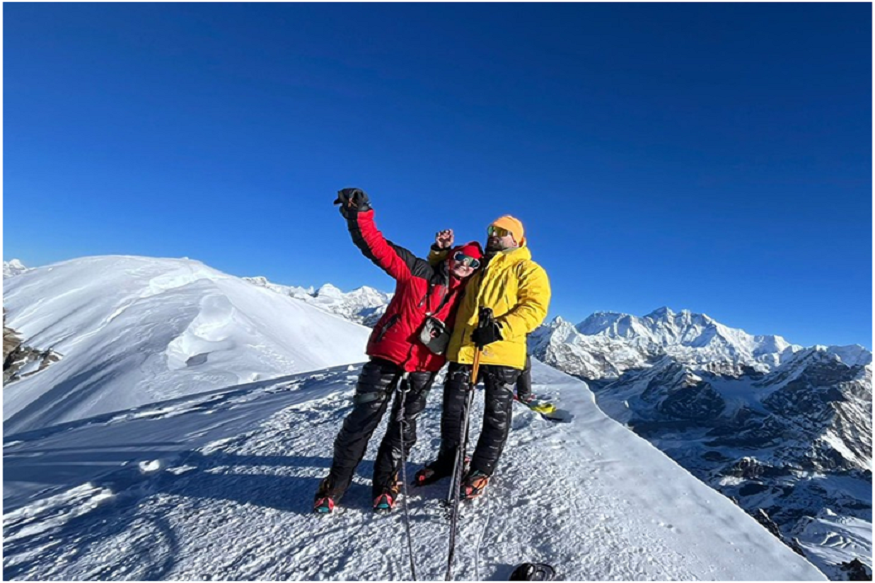
There is something interesting that happens when people talk about Nepal. Most of the time, the name Everest comes first: big, shiny, and dramatic. But mountains are never just one story. Beyond the crowded dream of the highest peak, there are quieter adventures, deeper journeys, and climbs that feel more personal, more real, and sometimes even more powerful. For trekkers and climbers who want more than just a postcard experience, routes like Island Peak climbing, Lobuche Peak climbing, Mera Peak climbing, and the Everest Three Passes trek open a different world. This world is raw, demanding, beautiful, and strangely addictive.
Let’s walk slowly through these journeys.
Island Peak climbing—the first true taste of mountaineering
Island Peak climbing is often called a beginner peak, but honestly, that description can be misleading. Yes, technically it is considered one of the easier trekking peaks in Nepal, but easy does not mean simple. The mountain still asks for respect, preparation, and patience. Island Peak, also known as Imja Tse, stands proudly at around 6,189 meters. What makes this climb special is not just the height but the entire experience leading to it. The approach follows the classic Everest Base Camp trail for some time, passing through lively Sherpa villages, prayer flags dancing in cold wind, and monasteries sitting quietly under a massive sky. As you move higher, the landscape begins to change. Trees disappear. Air becomes thinner. Silence grows louder. The climbing section itself is where many people feel their first real connection with mountaineering. There are fixed ropes, glacier travel, crampons biting into ice, and slow movement over snow slopes. Nothing extremely technical, but enough to feel the seriousness of the mountain. Many climbers say Island Peak climbing becomes their turning point. Before this, trekking was walking. After this, mountains become something else—something alive.
Lubuche Peak climbing—sharper, steeper, more demanding
If Island Peak feels like an introduction, Lobuche Peak climbing feels like a stronger conversation with the mountains. Lhotse Peak rises near the Everest region, with two main summits—east and west. The east peak, around 6,119 meters, is the one most climbers attempt. But don’t be fooled by the slightly lower elevation compared to Island Peak. Lubuche is often more challenging in technical terms. The climb involves steeper sections, exposed ridges, and more demanding mixed terrain. Here, climbers start understanding the balance between strength and mental control. Altitude is already tough, but exposure adds another layer of intensity. One of the most unforgettable parts of climbing Lobuche Peak is the scenery. Views stretch endlessly—Everest, Lhotse, Nuptse, and Ama Dablam—a gathering of giants surrounding you from every direction. There are moments during the climb when you pause, not because you are tired, but because the landscape almost forces you to stop and look. It feels unreal, like standing inside a painting that is constantly moving. This climb is perfect for trekkers who have already tasted altitude and want something more serious, more alpine in character.
Mere Peak Climbing—high, vast, and deeply humbling
Mera Peak Climbing is different. very different. At 6,476 meters, the near peak is actually higher than both Island and Lubuche. Yet technically, many consider it less difficult. But again, difficulty in mountains is never only about steepness or ropes.
MERA is about altitude.
The journey to Mera Peak takes you through remote valleys, less crowded trails, forests, hidden villages, and landscapes that feel untouched. Compared to the busy Everest Base Camp route, this trek feels quieter and more intimate.
Then comes the real challenge—the height. Climbing near a peak means spending a long time above 5,000 meters. Your body reacts in strange ways. Breathing changes. Sleep becomes lighter. Every movement feels slower and heavier. Even simple tasks require more energy. The summit day is usually long, cold, and silent. but the reward… It is extraordinary. From the top of Mera Peak, you can see five of the world’s highest mountains—Everest, Lhotse, Makalu, Cho Oyu, and Kanchenjunga—in the distance. The horizon feels endless. The scale of the Himalayas becomes almost impossible to comprehend. Many climbers describe mere peak climbing as a deeply humbling experience. Not dramatic, not aggressive, but vast, calm, and overwhelming in a quiet way.
Everest Three Passes Trek—the wildest circuit of the region
While peak climbing gives vertical adventure, the Everest Three Pass Trek offers horizontal intensity—a long, demanding, incredibly rewarding journey across the heart of the Khumbu region. This trek is not for casual walkers. The Everest three-pass trek crosses three major high-altitude passes—Kongma La, Cho La, and Renjo La. Each pass brings its own personality, weather patterns, challenges, and dramatic views. What makes this trek unique is the constant variety. One day you are walking through glacier valleys. The next day you are crossing icy slopes. Then suddenly you are beside the turquoise lakes of Gokyo, reflecting massive snow peaks like mirrors. Physically, this trek is demanding. multiple days above 5,000 meters. long walking hours. unpredictable weather. steep ascents and descents that test both legs and lungs. But emotionally, it is one of the richest experiences in Nepal. You don’t just see the Everest region—you live inside it. Villages, monasteries, yak pastures, frozen landscapes, sunrise over giant ridges—everything blends into a journey that feels epic without trying too hard. Trekkers who complete the Everest Three Passes Trek often say it becomes their most memorable adventure, even compared to Everest Base Camp itself.
Choosing between climbing and trekking—a personal question
Many travelers struggle with this decision. Climb a peak or do a long trek? Truthfully, there is no universal answer.
If you dream about standing on a summit, using climbing gear, and feeling that unique mixture of fear and excitement, then Island Peak climbing, Lubuche Peak climbing, or Mera Peak climbing can be life-changing. If you love long journeys, diverse landscapes, and the rhythm of walking through mountains day after day, then the Everest Three Passes Trek may feel like pure magic. Some people combine experiences—trekking first, climbing later. Others return multiple times, each visit unlocking a different adventure. Nepal has a strange way of pulling people back.
Physical preparation is more important than most think
One common mistake many travelers make is underestimating these journeys. Even “beginner peaks” involve serious altitude. Thin air is never negotiable. Your fitness becomes not just a comfort factor but a safety factor. Cardio endurance, leg strength, mental resilience—everything plays a role. Training does not need to be extreme. Consistent hiking, stair climbing, running, and basic strength work—these simple routines make a massive difference on the trail. Because at altitude, small weaknesses become very noticeable.
The mental side—the invisible challenge
Mountains test the mind as much as the body. Cold mornings, long days, slow progress, and moments of doubt—these are natural parts of high-altitude journeys. But something beautiful also happens.
As distractions disappear, the mind becomes clearer. worries feel smaller. Priorities shift. Many trekkers describe a strange sense of peace, even in physically demanding conditions. The mountains strip things down to essentials—breath, step, rhythm, and patience.
Why these adventures stay with you
People often think trekking and climbing are about views. Yes, the views are stunning and unforgettable. But the deeper impact is internal.
Island Peak climbing teaches courage.
Lubuche Peak climbing builds confidence.
Mere peak climbing brings humility.
The Everest Three Passes trek develops endurance and patience.
Each journey shapes you in subtle but lasting ways.
Long after returning home, memories remain vivid—cold air, endless ridges, the sound of boots on frozen ground, and the quiet satisfaction of pushing beyond comfort.
Final thoughts—beyond the obvious dream
Everest will always be iconic. But Nepal is far bigger than one mountain. For those willing to explore deeper, adventures like Island Peak climbing, Lobuche Peak climbing, Mera Peak climbing, and the Everest Three Passes trek offer experiences that feel raw, authentic, and intensely personal. These are not just trips. They become stories you carry for a lifetime. And sometimes, without realizing it, they quietly change the way you see challenges, limits, and even yourself. because mountains have this strange habit.
They never only show you the world.
They show you who you are inside it.
Contact Details
——————————–
Company address: Everest Trekking Routes Pvt. Ltd.
16 Khumbu, Nayabazaar, Kathmandu, Nepal
Mobile: +977-9843467921 (Rabin)
Email: info@everesttrekkingroutes.com
URL:– www.everesttrekkingroutes.com